

National Language Day
language day

When is your National Language Day?
On the last day of August, Romania celebrates its language. The day of August 31st, was declared by a law passed by Parliament in 2013 as the Romanian Language Day.
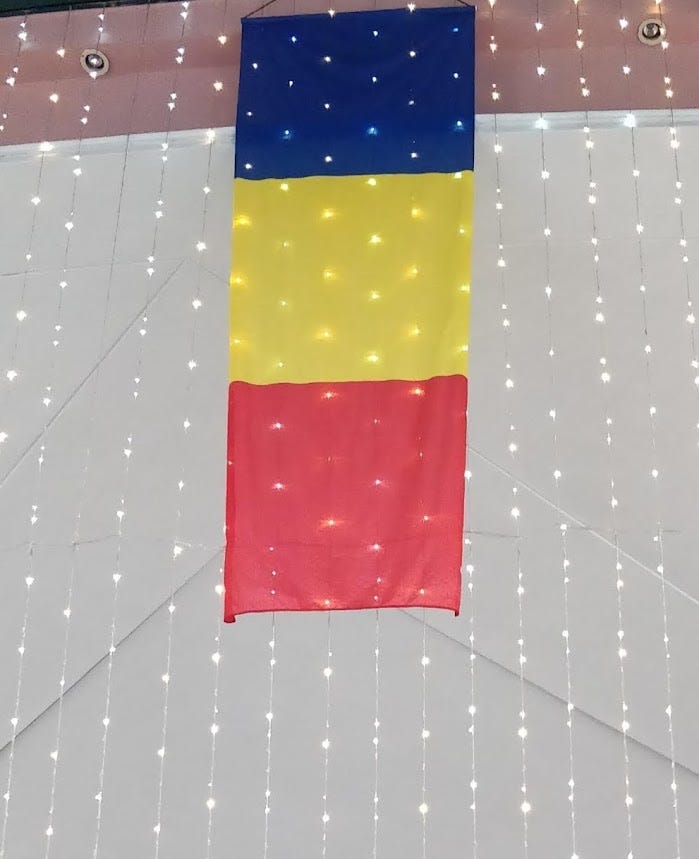
The Romanian language is a Romance language. Romance languages are a group of related languages all derived from Latin. Latin was introduced to the regions of the Carpathian Mountains and the lower Danube, by the Roman armies of the emperor Trajan (AD 106-271).
The major languages of the family inlcude French, Italian, Spanish, Portuguese and Romanian, all national languages. Romanian does share approximately 70 percent of its vocabulary with the other romance languages, mostly Italian and French, followed by Sardinian, Catala, Portuguese and Spanish, that’s why these languages come naturally to understand. It comes in handy when we have our holidays in the latin countries :).
Romanian is the official language of Romania and the Republic of Moldova.
We are approximately 28 millions speaking Romanian worldwide, of which 24 millions as a mother language.
Romanian is written in a Roman alphabet that was instituted in 1859. Prior to that it was written in a Cyrillic alphabet introduced into Romania via Old Church Slavic, the language for religious texts.
History of the Romanian Language:
Historians, when studying this language usually go back as fas as two thousands years. During that period, the area that is now known as Romania, was inhabited by a civilization known as the Dacians (pronounced dachyanz).
Linguists have studied the Romanian Language to find which words come from Dacian origin. They have discovered that one hundred and sixty words have this origin.
Constantin C.Giurescu in his book The Making of the Romanian People and Language (1972) shows us which words are those:
the human body: buz| = lip; ceaf| = nape; grumaz = neck;
the family: copil = child; prunc = baby; zestre = dowry;
agricultural, pastoral, viticultural, piscicultural activities: maz|re = peas; baci = shepherd making cheese; strung| = small gate through which sheep are passed to be milked; gard = fence;
the environment: mal = bank
the flora: brad = fir-tree; copac = tree
Did you know?
There are three words in Romanian that Unesco has included in the world’s universal heritage:
Dor - the strong longing to see someone, but it can also be the sweet nostalgia for dear things, times, places or people.
Colindă - song that is sung at Christmas, that has more meanings and it captures the moment when children go from one house to another and delight all those who welcome them with their songs and their beautiful voices.
Doina - a genre of Romanian folk lyric and musical folklore that renders precisely the infinite nuances of the word “dor”. Doina can be both a poem and a song, a cry of love but also a cry of pain.
I’ve searched YouTube and I’ve found this amazing playlist of doine (plural of “doina”). Amongst the artists, you’ll find Gheorghe Zamfir (plays the “nai”, musical instrument known in english as pan flute or panpipes), whose music you can hear in a lot of movies such as Once Upon a Time in America (1984), Kill Bill:volume 1 (2003), the Karade Kid movies.
In Helsinki, the Romanian Cultural Association (Asociația Culturală Română) had organized a beautiful event today, 1st of September where we’ve read poetry and spent time together. The biggest surprise came from two Finnish people who played some Romanian songs at the accordion and violin. What better way to end the evening?
How do you celebrate your National Language Day?
In Europe, the European Day of Languages is celebrated every year in September, 26th and there are plenty of events to choose from throughout Europe. You can see if you find something nearby your place here.
In the end, I want to share a poem from our national poet, Mihai Eminescu, nicknamed the MorningStar of the Romanian poetry, translation by Octavian Cocoș.
Out of all the masts (Dintre sute de catarge)
Out of all the masts that sail
Far away when the sea raves
How many will be destroyed
By the winds and by the waves?

Out of all the birds that fly
Over lands with their wings
How many will be wiped out
By the waves and by the winds?

If you chase away your luck
Your ideals and your aims
You'll be followed everywhere
By the winds and by the waves.

And your thought remains unknown
When you gently sing your hymns
But is carried akk around
By the waves and by the winds.